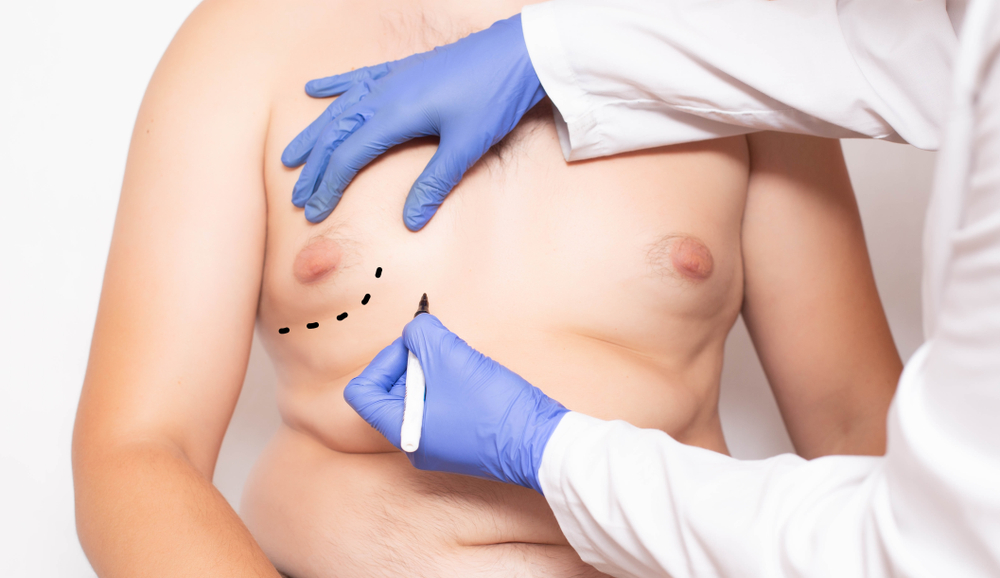
Gynecomastia is the enlargement of male breast tissue, and it can affect one or both sides of the chest. For many men, it causes frustration, self-consciousness, and discomfort in fitted clothing or situations where the chest is visible. While weight changes can affect chest fullness, true gynecomastia often involves glandular breast tissue that does not respond fully to diet or exercise alone.
What Causes Male Breast Enlargement?
Male breast enlargement can develop for several reasons, including genetics, hormonal changes, certain medications, weight fluctuations, or natural aging. In some cases, excess fat may be the main concern. In others, firm glandular tissue sits beneath the nipple and creates a fuller or puffy appearance.
Because the cause can vary from patient to patient, we begin with a careful consultation to understand your anatomy, goals, and the best treatment approach for your chest.
When Non-Surgical Changes May Not Be Enough
Lifestyle changes can help improve overall body contour, especially when excess fat is part of the concern. However, exercise and weight loss cannot reliably remove glandular breast tissue. This is why some men continue to notice fullness in the chest even after becoming leaner or more active.
If gynecomastia is affecting your confidence, male breast reduction may offer a more direct and long-lasting solution.
Treatment Options For Gynecomastia
Male breast reduction is tailored to the type and amount of tissue present. Depending on your needs, treatment may involve liposuction, direct tissue removal, or a combination of both.
Common treatment approaches may include:
- Liposuction to remove excess fatty tissue and improve chest contour
- Surgical excision to remove dense glandular breast tissue
- Small, well-placed incisions around the nipple or chest when needed
- Skin removal in more advanced cases with sagging or stretched tissue
- A customized approach to create a flatter, more masculine chest shape
What To Expect From The Procedure
During male breast reduction, the goal is to reduce unwanted fullness while keeping the chest contour natural. Incisions are typically planned to be as discreet as possible, often around the nipple or in areas that can heal with minimal visibility.
Recovery varies based on the extent of the procedure, but patients are usually given detailed instructions on activity limits, compression garments, and follow-up care. Swelling and bruising are expected at first, with results becoming more defined as healing progresses.
Why Choose Our Practice For Male Breast Reduction?
At Alan Matarasso, MD, FACS, PC, we take a personalized and detail-focused approach to male breast reduction. We understand that gynecomastia can feel difficult to discuss, so our goal is to provide clear guidance, privacy, and honest recommendations. By evaluating the amount of fat, glandular tissue, and skin laxity involved, we can help determine the most appropriate treatment plan for your goals.
Contact Alan Matarasso, MD, FACS, PC in New York, NY by calling 212-249-7500 to schedule a consultation for male breast reduction.
Powered by: 